Programme results in figures
(October 2020 - December 2023)
- 13184 people reached (6344 men; 6840 women)
- 281 healing spaces created: 4589 participants (1795 men; 2794 women)
- Resilience-oriented therapy: 35 spaces, 311 participants (122 men; 189 women)
- Multifamily therapy: 31 spaces; 580 participants (279 men; 301 women)
- Sociotherapy: 215 spaces; 3198 participants (1394 men; 1804 women)
- Prisoner rehabilitation and reintegration:
- 15 healing spaces created in 5 prisons; 398 participants (97 men; 302 women)
- 77 correctional officers (49 men; 28 women) trained
- Collaborative livelihoods:
- 405 people (208 men; 197 women) trained in financial and entrepreneurship skills
- 411 participants (141 men; 270 women) trained in hands-on skills
- 51 business initiatives supported with 846 members (419 male; 427 female)
- 4 Youth Business hubs established
- 296 community dialogue facilitators (145 men; 151 women) trained to facilitate healing spaces
- 125 mental health professionals (49 men; 76 women) trained in the use of contextualised mental health and psychosocial support (MHPSS) protocols
- 2665 people (1278 men; 1387 women) trained in life skills and socio-emotional skills
- 2885 participants (1367 men; 1518 women) attended psychoeducation trainings
- 401 high-school teachers (329 men; 72 women) trained in history and trauma-sensitive teaching
- 24 journalists (18 men; 6 women) trained in MHPSS-informed reporting
- 24 trainers (7 men; 17 women) attended a training-of-trainers on positive masculinity and parenting
- 3 research studies conducted
- 8 MHPSS protocols and curricula developed
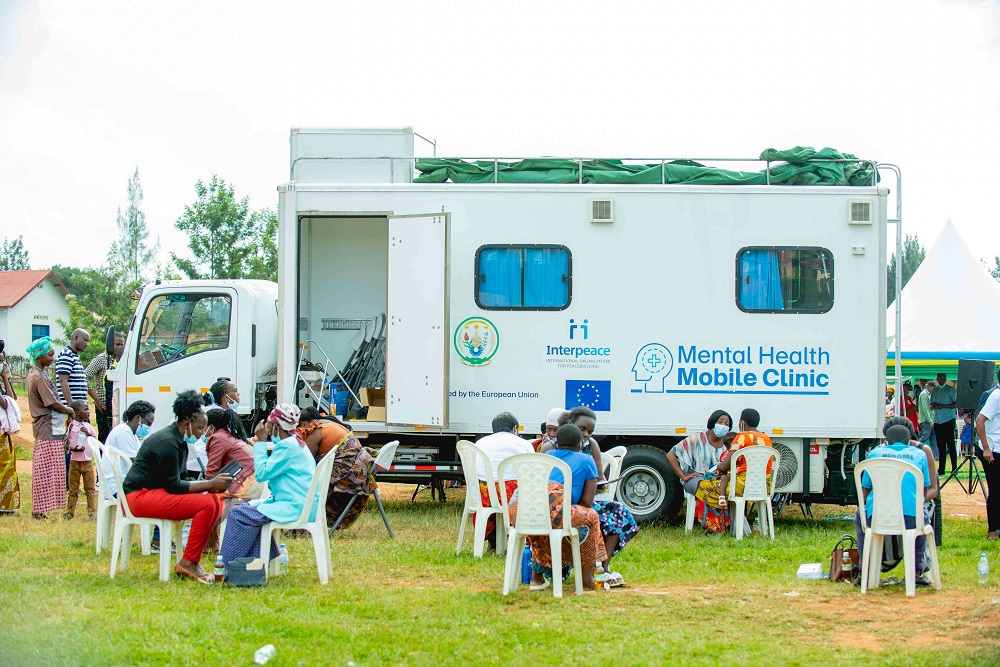
- One Mental Health Mobile Clinic launched
- 16 motorcycles provided to district hospital and health centers
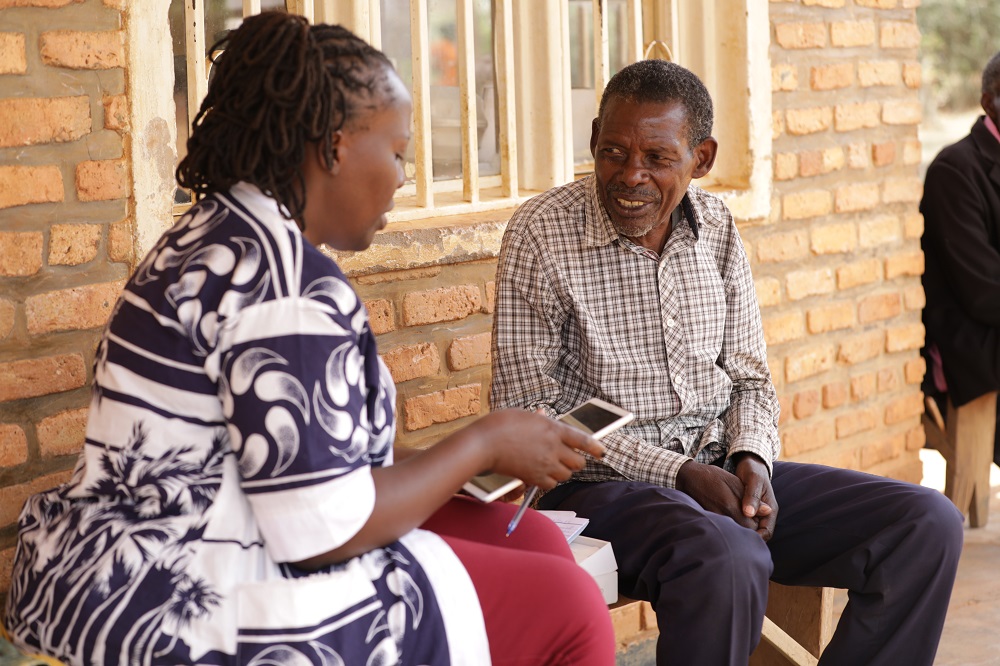
- 56 tablets provided to district hospital and health centers for data collection and safeguarding
- One Technical and Vocational Education and Training (TVET) facility constructed in Bugesera Prison